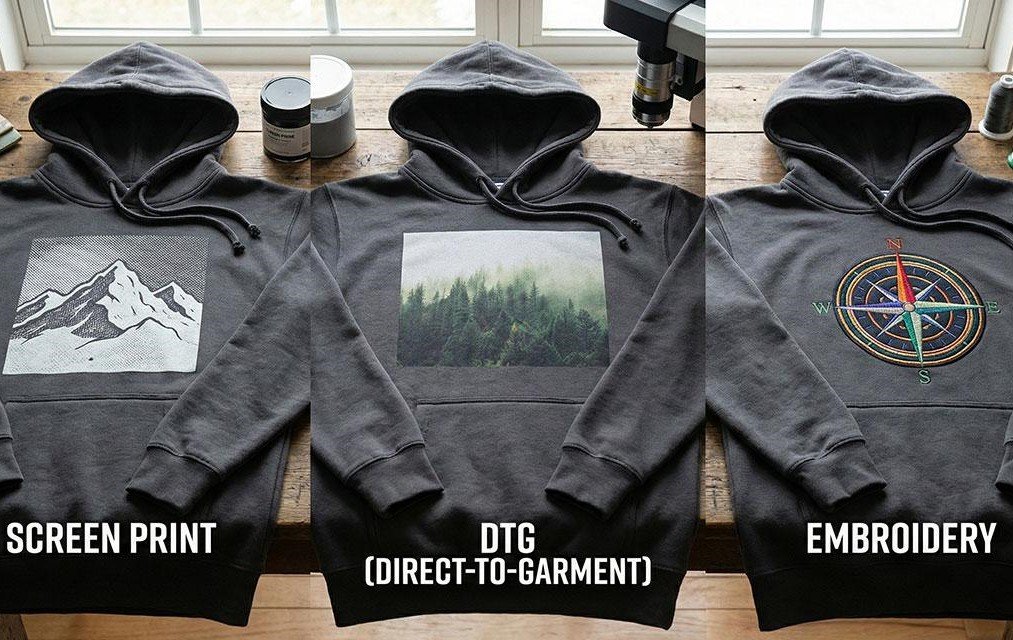
You have designed the perfect graphic. It looks bold on your screen. But how will it look after twenty washes? This question separates successful streetwear brands from forgotten ones. Your print’s durability defines your brand’s reputation. Two methods dominate streetwear production: screen printing and Direct-to-Garment (DTG). Each offers distinct advantages. Each has hidden limitations. This guide breaks down their differences in durability, cost, feel, and scalability. Consequently, you can make an informed choice for your custom printed hoodies and t-shirts.
Understanding Screen Printing
Screen printing is the industry’s gold standard. It pushes ink through a mesh stencil onto the garment. Each color requires a separate screen. This method creates a thick, vibrant layer of ink. The ink bonds with fabric fibers. As a result, screen prints withstand hundreds of washes without cracking or fading.
For example, a well-executed screen print on a 400 GSM hoodie can last for years. The print becomes part of the garment. It moves with the fabric. It resists peeling. Therefore, most professional Turkish clothing manufacturers recommend screen printing for streetwear collections intended for long-term wear.
However, screen printing has requirements. It demands higher minimum quantities (typically 50+ pieces per design). Setup costs increase with each color. Complex, photographic designs are difficult to reproduce. Despite these limitations, screen printing remains the top choice for durability-focused brands.
Understanding Direct-to-Garment (DTG)
DTG works like a standard printer. It sprays water-based ink directly onto the fabric. No screens are needed. Consequently, DTG excels at complex, multi-color, and photographic designs. It handles small quantities easily. Setup costs are minimal.
Nevertheless, DTG has durability challenges. The ink sits more on top of the fabric. It does not penetrate as deeply as screen printing ink. With repeated washing, DTG prints may fade, crack, or develop a cloudy appearance. A DTG print on a t-shirt might look great for ten washes. After thirty washes, however, noticeable degradation often occurs.
Therefore, DTG suits limited drops, sample runs, or designs with many colors. For core collection items expected to last, screen printing is generally superior.
Head-to-Head: Durability Comparison
Let us examine durability directly. Screen printing wins this category decisively. The ink layer is thicker and more resilient. It bonds with cotton fibers effectively. High-quality screen printing from a reputable Turkish clothing manufacturer can survive 100+ washes with minimal fading. In contrast, DTG prints typically show wear after 20-30 washes. Cracking appears first in high-friction areas like underarms or pocket edges. Consequently, for hoodies and t-shirts that customers will wear weekly, screen printing is the safer investment.
Head-to-Head: Cost Analysis
Cost depends on quantity and design complexity. For small runs (under 50 pieces), DTG is cheaper. There are no screen fees. Each print costs a few euros. For larger runs (100+ pieces), screen printing becomes more economical. Per-unit costs drop significantly. Setup fees spread across many garments. Additionally, screen printing on dark garments requires a white underbase, which adds cost. DTG on dark garments also requires pretreatment, adding time and expense.
Thus, your order volume should guide your choice. Starting with 50 printed hoodies? DTG may be practical. Planning 300 pieces of a two-color design? Screen printing will save money and last longer.
Head-to-Head: Feel and Aesthetic
Streetwear customers care about how a print feels. Screen printing leaves a slight texture. You can feel the ink on the fabric’s surface. Some brands prefer this tactile quality. It signals that the garment is printed, not just stamped. However, heavy ink layers can feel stiff initially. They soften after washing.
DTG produces a much softer feel. The ink absorbs into the fabric’s top layer. The print is barely noticeable to the touch. This feels premium for some designs, especially watercolor or faded effects. Nevertheless, the soft feel comes at the cost of durability.
Therefore, consider your design aesthetic. Bold, graphic, retro styles suit screen printing’s texture. Photographic, painterly, or subtle designs may benefit from DTG’s soft hand.
Scalability and Production Lead Times
Your brand will hopefully grow. Therefore, consider how each method scales. Screen printing scales beautifully. Once screens are made, production is fast. A Turkish clothing manufacturer can print hundreds of hoodies per hour. Lead times are predictable.
DTG scales less efficiently. Each garment prints individually. High-volume orders take days, not hours. Consequently, DTG is best for small batches or print-on-demand models.
Making the Right Choice for Your Brand
Ask yourself these questions before deciding:
- How many units per design will you order? Under 50? Consider DTG. Over 100? Screen printing is likely better.
- How many colors are in your design? One to four colors? Screen printing works well. Five or more? DTG may be simpler.
- What is your expected garment lifespan? Six months of occasional wear? DTG suffices. Two years of weekly wear? Choose screen printing.
- What is your brand positioning? Entry-level streetwear? Both work. Premium, durable streetwear? Screen printing is expected.
Many successful streetwear brands use both methods. They screen print their core logo hoodies and t-shirts. They use DTG for small experimental drops or artist collaborations. This hybrid approach balances quality, cost, and creativity.
Working with Turkish Manufacturers
Turkey’s apparel industry excels at both printing methods. A professional Turkish clothing manufacturer will offer screen printing as their standard service. Many also provide DTG for smaller or more complex orders. When evaluating partners, request print samples of each method. Wash them yourself. Compare fading after five, ten, and twenty cycles. This simple test reveals the true quality difference.
Additionally, ask about their screen mesh counts. Higher mesh counts (e.g., 200-305) produce finer details and softer prints. Lower counts (110-160) lay down thicker ink for bold, opaque results. A knowledgeable manufacturer will guide you based on your design and fabric.
Conclusion
Screen printing and DTG both have places in streetwear production. Screen printing offers unmatched durability, better economy at scale, and a classic feel. DTG provides design freedom, low startup costs, and soft-hand prints. For most streetwear brands building long-term customer loyalty, screen printing is the superior choice. It withstands the test of time. It signals quality. It protects your reputation. Partner with an experienced Turkish clothing manufacturer to execute screen printing at the highest level. Your customers will notice the difference. Your brand will thank you.