Your first production run feels terrifying. You have invested savings, time, and dreams into your streetwear brand. One wrong decision could ruin everything. Nevertheless, thousands of brands have navigated this journey before you. Their lessons are available. Their mistakes are avoidable. This guide shares exactly what you need to know before producing your first batch of printed hoodies.
Why Printed Hoodies Dominate Streetwear
Hoodies are streetwear’s crown jewel. They offer maximum canvas space for bold graphics. They provide comfort and status simultaneously. A great hoodie becomes a walking billboard for your brand. Consequently, most successful streetwear launches center on hoodies.
However, hoodie production is more complex than t-shirts. The fabric is thicker. The construction involves ribbing, drawcords, and kangaroo pockets. The printing process faces additional challenges. Therefore, careful planning is essential.
Step 1: Perfect Your Tech Pack Before Contacting Manufacturers
Your tech pack is your bible. Without it, manufacturers cannot quote accurately. With it, they respect your professionalism. A complete tech pack for printed hoodies includes:
- Flat sketches with all measurements (front, back, side)
- Fabric specification (weight, blend, composition)
- Ribbing specification (cuffs, hem, waistband)
- Print placement diagram with exact distances from seams
- Pantone colors for each print element
- Label and tag specifications
- Packaging requirements
Many first-time founders skip details. For example, they forget to specify hood depth or drawcord material. As a result, manufacturers fill the gaps with their own assumptions. This leads to surprises. Therefore, invest time in your tech pack. Hire a freelance technical designer if needed. The cost (typically €100-300) saves thousands in production errors.
Step 2: Choose Your Hoodie Blank or Cut-and-Sew
Your first production run presents a critical choice. Will you print on existing blanks or develop a custom cut-and-sew hoodie?
For most first-time brands, premium blanks are the smarter choice. Here is why. Blanks eliminate pattern-making risks. The fit is already proven. The fabric is already sourced. Your only variable is the print. Consequently, you can focus on design and marketing.
Nevertheless, if your brand identity demands a unique silhouette, cut-and-sew is worth exploring. A Turkish clothing manufacturer can guide you through the process. However, expect longer timelines (12-14 weeks) and higher minimums (200+ pieces).
Step 3: Select the Right Fabric Weight
Fabric weight defines your hoodie’s feel and perceived value. Streetwear customers recognize quality by weight.
- 280-320 GSM: Lightweight summer hoodies. Soft but less durable.
- 350-380 GSM: Mid-weight. Good for layering. Popular for printed hoodies.
- 400-450 GSM: Heavyweight. Premium feel. Holds shape well. Ideal for streetwear.
- 480+ GSM: Ultra-heavy. Very warm. Limited flexibility. Higher cost.
For your first production run, aim for 380-400 GSM. This weight balances quality and cost. It prints well. It feels substantial without being stiff. Moreover, it appeals to both summer and winter customers.
Step 4: Understand Printing Methods for Hoodies
Hoodie printing differs from t-shirt printing. The fabric is thicker and often textured. Consequently, some printing methods work better than others.
Screen printing remains the top choice for durability. However, hoodie fabric can be uneven. Therefore, your Turkish clothing manufacturer should use high mesh counts (200-305) and proper off-contact distance. This ensures clean, consistent prints.
DTG (Direct-to-Garment) works on hoodies but has limitations. The thick fabric requires more pretreatment. The print may not penetrate deeply. After washing, DTG prints on hoodies often crack faster than on t-shirts.
Heat transfers (vinyl or screen-printed transfers) offer another option. They work well for small runs. However, they feel plastic-like and crack over time. For premium printed hoodies, screen printing is strongly recommended.
Step 5: Order and Evaluate Pre-Production Samples
Never skip the sampling stage. This rule saves brands from disaster repeatedly.
Order a pre-production sample (also called a “strike-off” or “first sample”). This sample should use your exact fabric and print method. Wear it for a week. Wash it three times. Check for shrinkage, color bleeding, and print cracking. Measure it before and after washing.
If the sample fails any test, do not approve production. Communicate clearly with your manufacturer. Request a revised sample. For example, if the print cracks, ask about different ink types or curing temperatures. If the fabric shrinks excessively, discuss pre-shrinking options. A professional clothing manufacturer will welcome this feedback. They want your success.
Step 6: Plan Your Minimum Order Quantity (MOQ)
MOQ is the minimum number of pieces a manufacturer will produce. For printed hoodies, MOQs vary widely.
- Turkish blanks with printing: MOQs of 50-100 pieces per color/style are common.
- Cut-and-sew with custom fabric: MOQs often start at 200-300 pieces.
- Large factories with long runs: 500-1000 pieces.
For your first production run, choose a partner with flexible MOQs. Many Turkish manufacturers now serve emerging brands. They understand that small orders today become large orders tomorrow. Be honest about your expected volume. A good partner will work with you.
Step 7: Budget for Hidden Costs
Your manufacturer’s quote covers production. Nevertheless, several hidden costs await:
- Sampling fees: €50-200 per sample. Multiple rounds add up.
- Shipping and customs: From Turkey to Europe, truck shipping costs €300-800 for small pallets.
- Duties and VAT: Depending on your country, 12-25% additional.
- Packaging: Custom poly bags, stickers, and boxes add €1-3 per unit.
- Photography: Professional lookbook photos cost €500-2000.
Therefore, add 30-40% to your production quote for your total launch budget. This buffer prevents last-minute cash shortages.
Step 8: Establish a Realistic Timeline
Your first production run will take longer than expected. Accept this fact. Build buffers accordingly.
A typical timeline with a Turkish clothing manufacturer for printed hoodies:
- Week 1-2: Tech pack finalization and manufacturer selection
- Week 3-4: Sample production and shipping to you
- Week 5-6: Sample evaluation and revisions (repeat as needed)
- Week 7: Final sample approval and production deposit
- Week 8-12: Bulk production (fabric cutting, sewing, printing)
- Week 13-14: Quality control and packing
- Week 15: Shipping to your warehouse (3-7 days by truck to Europe)
Total: 15 weeks from start to delivery. Consequently, plan your launch date accordingly. Do not promise customers delivery in 8 weeks. Be honest. Be transparent. Delays happen.
Step 9: Inspect Your Finished Goods
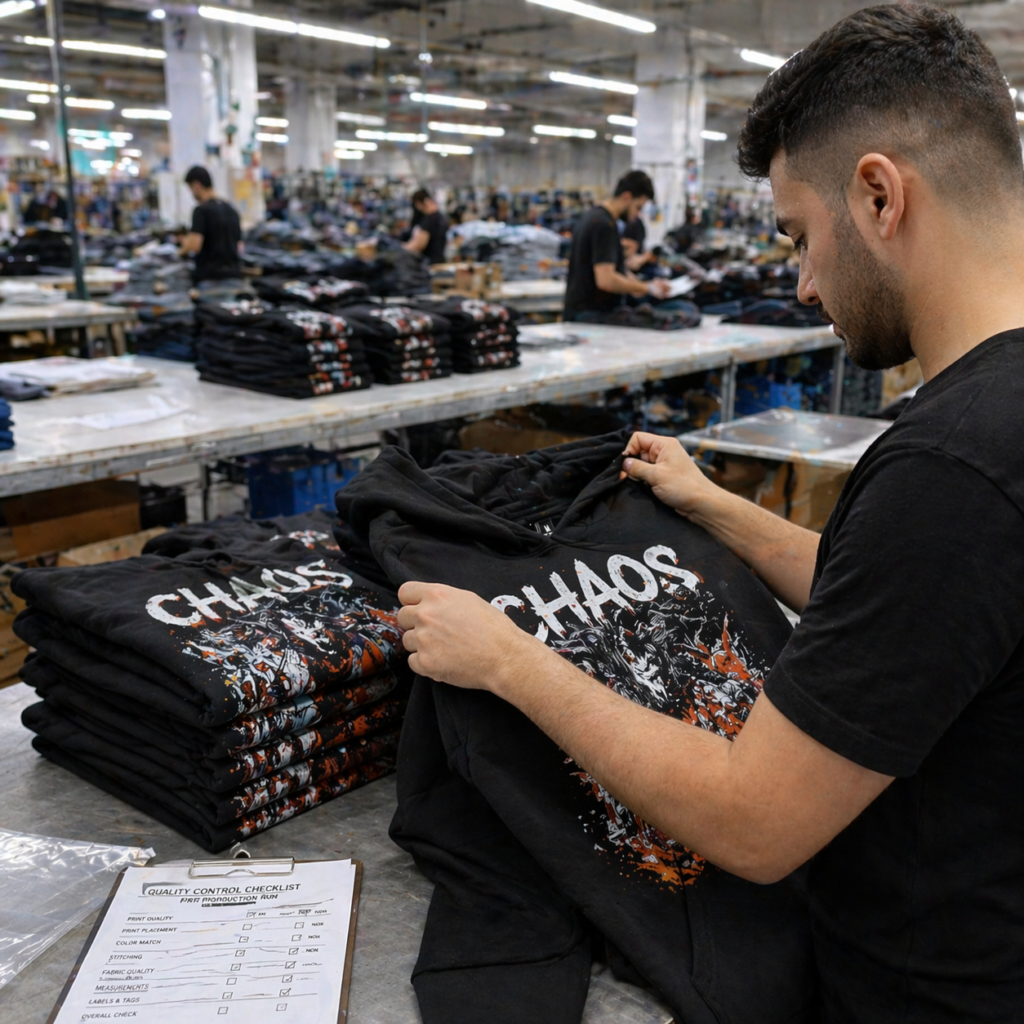
When your hoodies arrive, inspect every piece immediately. Do not assume everything is perfect. Set up a quality control station. Check each hoodie for:
- Print placement accuracy (measure distances)
- Print clarity and color matching
- Loose threads or stitching errors
- Fabric defects (holes, stains, uneven dye)
- Correct sizing (measure a sample from each size)
- Packaging condition
If you find defects, document them with photos. Contact your manufacturer immediately. A reputable partner will offer solutions: discounts, replacements, or credits on future orders. Communication is key.
Step 10: Learn and Improve for Round Two
Your first production run is a learning experience. It will not be perfect. No first run ever is. Therefore, after launch, conduct a thorough review.
What went well? What would you change? Was the fabric weight correct? Did the print hold up? Were communication and timelines acceptable? Collect this feedback. Share it with your manufacturer. Use it to improve your tech pack for the next order.
Many brands switch manufacturers after one disappointing run. Sometimes this is necessary. Often, however, the problem is communication, not capability. Building a long-term relationship with a Turkish clothing manufacturer pays dividends. They learn your preferences. They prioritize your orders. They become partners, not vendors.
Conclusion
Your first printed hoodie production run is achievable. The path is well-worn. Focus on preparation. Invest in sampling. Choose a partner with flexible MOQs and clear communication. Turkey’s manufacturing sector offers exceptional quality for streetwear brands. Take the first step today. Your brand’s first hoodie is waiting to be made.