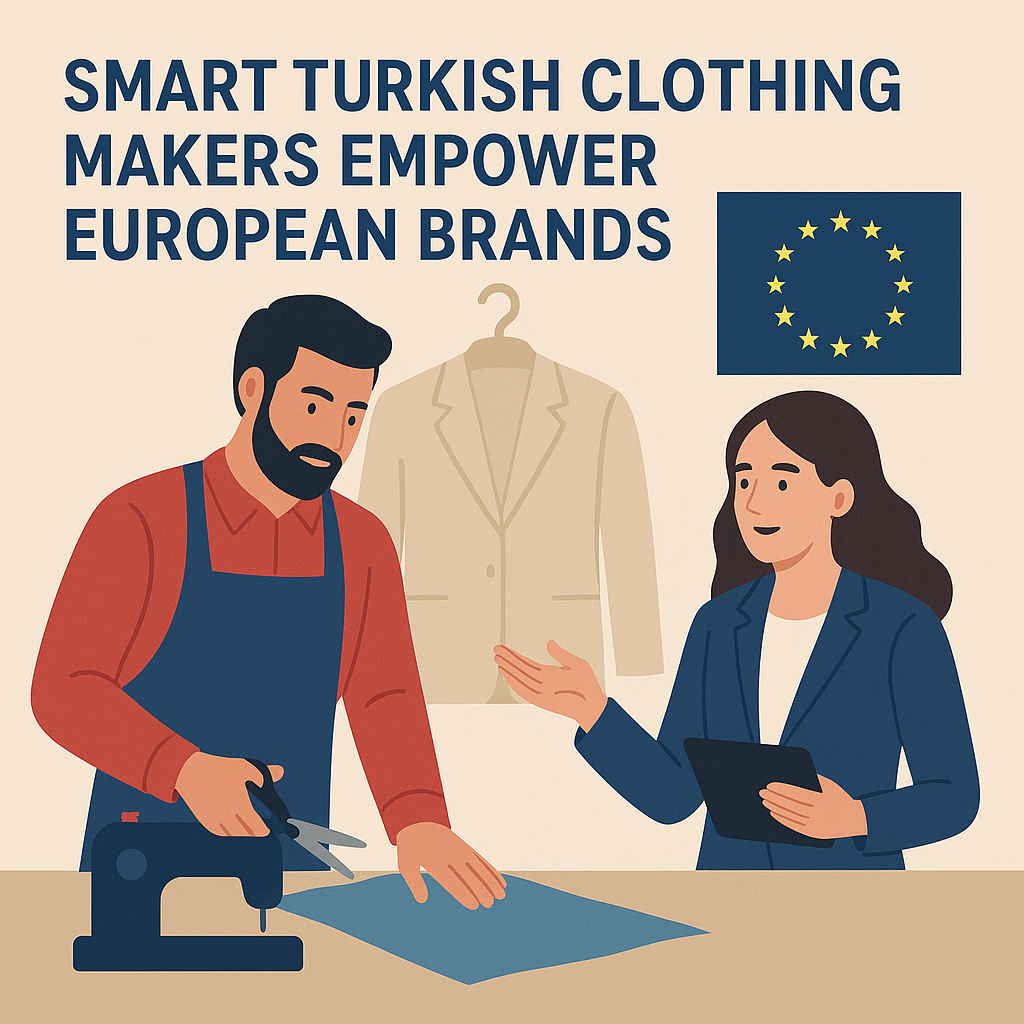
Europe’s fashion industry is evolving rapidly. Consumers now demand not only style but also sustainability, speed, and transparency. In this new reality, Turkish clothing manufacturers have emerged as the perfect partners for European brands seeking reliability and eco-conscious production.
For decades, Turkey has been one of the world’s most important textile hubs. Its geographic position — connecting Europe and Asia — gives it both logistical advantages and a deep-rooted textile tradition. Yet what truly distinguishes Turkish manufacturers today is how they blend traditional craftsmanship with modern, sustainable innovation.
Why European Brands Choose Turkey
European brands, especially from the UK, Germany, France, and Italy, increasingly prefer Turkish production for several reasons. Proximity means shorter lead times. A shipment from Istanbul can reach most European capitals in just a few days. This advantage enables fashion labels to respond quickly to changing trends, making fast fashion sustainable and strategic.
Moreover, Turkish factories are highly adaptable. Many manufacturers specialize in low-MOQ production runs — ideal for emerging designers or boutique brands that prioritize exclusivity. For larger retailers, Turkey offers scalable capacity with world-class quality control standards.
Sustainability as a Core Value – Turkish Clothing
The global fashion conversation revolves around sustainability — and Turkey is no exception. Across Istanbul, Izmir, and Bursa, factories are embracing eco-friendly dyeing, recycled fabrics, and solar-powered facilities. Many are certified by global standards such as GOTS, OEKO-TEX, and Sedex, ensuring every garment is ethically produced.
What’s impressive is how sustainability in Turkey is not just a trend but a mindset. Manufacturers collaborate directly with European buyers to design production systems that minimize waste and maximize efficiency. The result: clothing that looks elegant, feels luxurious, and supports a responsible supply chain.
Innovation and Technology in Production – Turkish Clothing
Gone are the days when clothing manufacturing was purely manual. In Turkey, digital transformation has become an industry standard. Many workshops use 3D sampling, AI-driven pattern cutting, and automated quality inspection. This combination of technology and skilled human oversight ensures consistency and reduces production time dramatically.
Technology also plays a critical role in transparency. Using blockchain-based systems, several Turkish factories now provide full traceability — from yarn to final garment. European buyers can see the origin of every material used, fostering trust and accountability.
The Power of Design Collaboration – Turkish Clothing
European fashion brands often describe Turkish manufacturers as more than suppliers — they’re partners in creativity. Turkish designers bring a unique blend of Mediterranean flair and precision tailoring. Collaboration sessions often take place in vibrant design studios filled with color swatches, mood boards, and prototypes crafted by expert artisans.
This hands-on collaboration allows European fashion houses to transform their concepts into tangible products faster and with superior quality. Whether it’s minimalist Scandinavian aesthetics or luxurious Parisian couture, Turkish clothing manufacturers deliver versatility.
Sustainability Beyond Production
Sustainability in Turkish fashion extends to packaging, logistics, and even workplace culture. Many factories have eliminated single-use plastics, switched to recycled paper packaging, and optimized logistics routes to lower carbon emissions.
More importantly, they invest in people. Worker well-being, safety, and education are fundamental principles. Turkish manufacturers understand that sustainability begins with social responsibility — ensuring fair wages, safe working conditions, and skill development programs.
Economic and Strategic Advantages
Turkey’s Customs Union with the EU allows seamless trade and reduced tariffs. This economic integration, combined with advanced logistics networks, makes sourcing from Turkey more efficient than from Asia. Additionally, the Turkish Lira’s competitiveness creates cost advantages for European buyers without sacrificing quality.
These factors position Turkey as Europe’s most strategic fashion partner — bridging the gap between affordability and ethical excellence.
The Future of Turkish-European Collaboration
As European consumers continue demanding sustainable and locally sourced fashion, partnerships with Turkey will deepen. Brands are now establishing long-term relationships with trusted Turkish manufacturers, developing exclusive lines that highlight transparency and craftsmanship.
Digital showrooms, virtual fittings, and co-branded sustainability initiatives are already shaping the future. The synergy between Europe’s design vision and Turkey’s manufacturing expertise is rewriting the rules of global fashion supply chains.
Conclusion
In today’s competitive fashion landscape, success depends on speed, sustainability, and storytelling. Turkish clothing manufacturers embody all three. They produce garments that meet Europe’s highest standards while preserving the environment and empowering local communities.
From premium denim in Denizli to organic cotton in Izmir and high-end tailoring in Istanbul — Turkey is not just a supplier; it’s the creative engine behind Europe’s next fashion chapter.
For European brands seeking a sustainable, reliable, and inspired production partner, Turkey remains the smartest choice.