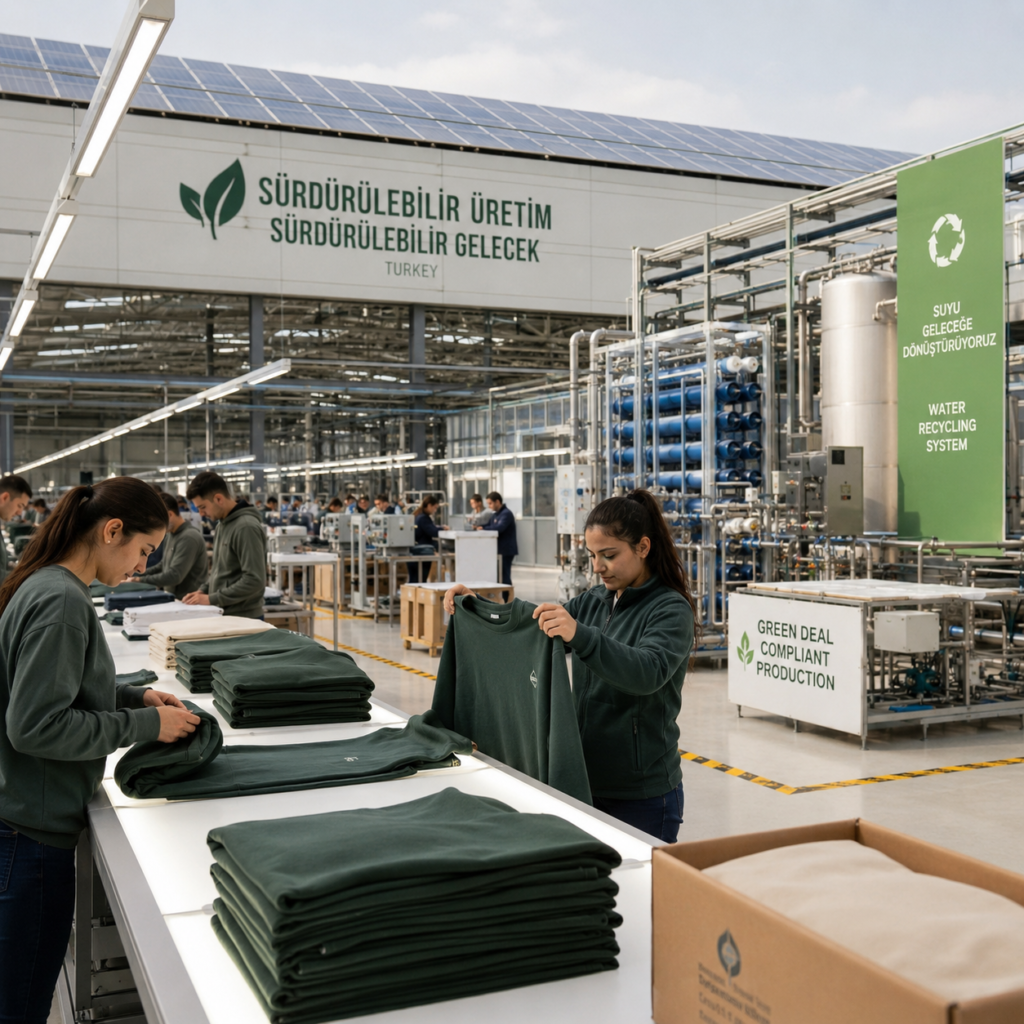
Sweatshirts are streetwear essentials. They are comfortable, stylish, and versatile. However, traditional sweatshirt production carries a heavy environmental cost. Heavy fleece requires significant water, energy, and chemicals. Fortunately, change is happening. Turkey has launched the Turkey Green Deal Action Plan for the Textile & Apparel Sector. This framework helps manufacturers produce garments more sustainably. Consequently, your streetwear brand can now offer eco-friendly sweatshirts without sacrificing quality or style. This guide explains exactly how.
Understanding the Green Deal for Sweatshirts
The Turkey Green Deal Action Plan – Textile & Apparel Working Group focuses on reducing environmental impact. Key areas include decarbonization, water conservation, chemical management, and circular economy. For sweatshirt production, this means using renewable energy, recycling dyeing water, eliminating hazardous chemicals, and minimizing waste. A Turkish clothing manufacturer aligned with this plan can produce fleece with a much smaller footprint. Therefore, your brand gains authentic sustainability credentials.
Moreover, the Working Group provides training and resources. Manufacturers learn best practices from each other. This collective effort accelerates green transformation across the sector. As a result, eco-friendly sweatshirts become more accessible and affordable.
Why Sustainable Sweatshirts Matter Now
Consumer expectations are shifting rapidly. European shoppers actively seek out sustainable apparel. They check labels, research brands, and avoid greenwashing. Simultaneously, EU regulations tighten. The Corporate Sustainability Reporting Directive (CSRD) requires detailed disclosures. The proposed Ecodesign for Sustainable Products Regulation (ESPR) will ban destruction of unsold goods. Therefore, ignoring sustainability is no longer an option.
On the other hand, embracing it creates competitive advantages. Sustainable sweatshirts command premium prices. They attract loyal, repeat customers. They also simplify compliance with retailers and marketplaces. Consequently, partnering with a Green Deal-aligned Turkish clothing manufacturer is a smart strategic move.
Eco-Friendly Fabrics for Sweatshirts
Fabric choice determines most of your sweatshirt’s environmental impact. Conventional cotton-polyester fleece has problems. Cotton consumes大量 water and pesticides. Virgin polyester comes from fossil fuels. Fortunately, better options exist.
Organic cotton fleece is grown without synthetic chemicals. It uses up to 91% less water than conventional cotton. Turkey is a leading producer of certified organic cotton. A Turkish clothing manufacturer can source it locally, reducing transport emissions.
Recycled polyester fleece comes from plastic bottles or textile waste. It reduces petroleum use and landfill waste. Many Turkish manufacturers now offer recycled polyester blends. A 70% organic cotton / 30% recycled polyester blend works perfectly for premium sweatshirts.
Tencel (lyocell) fleece is another innovative option. It is made from sustainably harvested wood pulp. The closed-loop production process recycles 99% of solvents. Tencel is soft, breathable, and biodegradable. Turkish mills produce Tencel blends as well.
Look for certifications: GOTS (Global Organic Textile Standard), OEKO-TEX Standard 100, and RCS (Recycled Claim Standard). The Turkey Green Deal Action Plan Textile Apparel Working Group encourages widespread adoption of these certifications.
Green Dyeing and Finishing for Fleece
Dyeing and finishing are the most polluting stages of sweatshirt production. Conventional methods use large amounts of water, energy, and chemicals. However, new technologies reduce this impact significantly.
Foam dyeing applies dye as a foam rather than a liquid bath. It reduces water use by up to 50%. Air-dyeing uses compressed air instead of water to fix dyes to fabric. Some Turkish factories have adopted these methods. Additionally, digital printing on fabric eliminates screen cleaning waste.
Reactive dyes with high fixation rates mean less dye washed off into wastewater. A Green Deal-aligned Turkish clothing manufacturer will treat all wastewater before discharge. Some even recover and reuse water multiple times, achieving up to 90% water recycling rates.
Furthermore, many Turkish textile mills now use renewable energy. Solar panels on factory roofs power knitting and dyeing machines. This reduces the carbon footprint per sweatshirt significantly. Ask your potential partner about their energy mix and water recycling rates.
Circular Production and Waste Reduction
Sweatshirt production generates fabric scraps from cutting. In a circular model, these scraps are collected and recycled into new yarn. Some Turkish manufacturers have partnerships with recycling facilities. Others use zero-waste pattern cutting to minimize scrap from the start.
Defective sweatshirts can also be recycled. Rather than landfilling, they are shredded and spun into new fiber. This closed-loop approach keeps materials in use. It also reduces raw material costs over time. Therefore, circular production is both environmentally and economically smart.
The Turkey Green Deal Action Plan promotes circular economy principles. Participating manufacturers report on waste diversion rates and recycling partnerships. As a brand, you can include these metrics in your sustainability communications.
Sustainable Printing and Embellishment
Streetwear sweatshirts often feature bold prints. Traditional plastisol ink contains PVC and phthalates. These are harmful to the environment. Instead, choose water-based inks. They are non-toxic and feel softer on the fabric. Discharge printing removes dye rather than adding a layer. This uses fewer chemicals.
Embroidery is inherently more sustainable than printing. It uses thread and creates no chemical waste. However, it costs more. For a balance, mix embroidery for logos and water-based printing for larger graphics. A Turkish clothing manufacturer can advise on the best combination.
Packaging and Logistics Under the Green Deal
Sustainability extends to how your sweatshirts reach customers. Replace single-use poly bags with compostable or recycled alternatives. Compostable bags made from cornstarch break down naturally. Recycled plastic bags give waste a second life. Some brands use paper wraps or reusable cotton bags. Your manufacturer can source these options.
Turkey’s proximity to Europe is a huge logistical advantage. Trucks can deliver sweatshirts to most EU countries in 3-5 days. This is much faster and lower-emission than sea or air freight from Asia. Consequently, your supply chain’s carbon footprint shrinks naturally.
To further reduce impact, consolidate shipments. Order larger quantities less frequently. Ask your Turkish clothing manufacturer about carbon offset programs. Some factories invest in reforestation or renewable energy projects to compensate for remaining emissions.
Certifications and Transparency for Your Brand
Marketing sustainable sweatshirts requires credible proof. Greenwashing damages trust quickly. Therefore, collect and share certifications.
GOTS certification ensures organic status, ethical labor, and environmental management across the entire supply chain. OEKO-TEX Made in Green provides traceability and worker safety data. RCS (Recycled Claim Standard) verifies recycled content.
The Turkey Green Deal Action Plan – Textile & Apparel Sector includes a monitoring framework. Manufacturers share verified data on energy, water, waste, and chemicals. Request this data for your marketing claims and regulatory filings.
EU regulators are introducing Digital Product Passports (DPPs). These will contain detailed environmental and material information for each garment. Early adoption positions your streetwear brand as a leader. Your Green Deal-aligned manufacturer can help populate DPPs with accurate data.
How to Find the Right Turkish Manufacturer
Finding a Turkish clothing manufacturer aligned with the Green Deal requires research. Start by checking industry association websites. The Istanbul Apparel Exporters’ Association (İHKİB) publishes lists of member manufacturers committed to sustainability.
Next, review potential partners’ websites for sustainability reports, certifications, and Green Deal participation statements. Request an initial meeting. Ask specific questions: What is your water recycling rate? What percentage of your energy comes from renewables? Do you participate in the Turkey Green Deal Action Plan Textile Apparel Working Group?
Order fabric swatches and sample sweatshirts. Test the quality, feel, and durability. Request wash tests to ensure prints and colors last. A transparent manufacturer will gladly provide this information.
Actionable Steps for Your Brand
Ready to produce sustainable sweatshirts? Follow these steps:
First, define your sustainability goals. Do you want organic cotton, recycled polyester, or Tencel? What certifications matter most to your customers?
Second, identify potential Turkish clothing manufacturers aligned with the Green Deal. Shortlist three to five partners.
Third, request quotes and sample sweatshirts. Compare quality, pricing, and lead times.
Fourth, visit the factory if possible, or request a virtual tour. Verify their Green Deal claims.
Fifth, negotiate sustainable packaging and consolidated shipping.
Sixth, collect all documentation: fabric certificates, dyeing reports, energy data, and waste metrics. Use these in your marketing and on your product pages.
Conclusion
The Turkey Green Deal Action Plan for the Textile & Apparel Sector is transforming sweatshirt production. Eco-friendly fleece, green dyeing, circular processes, and transparent certifications are now achievable. By partnering with a compliant Turkish clothing manufacturer, your streetwear brand can offer sustainable sweatshirts that consumers trust and regulators approve. Start your green journey today.